G20 Summit in South Africa Concludes Amid U.S. Boycott, Unusual Procedures and Sharp Divisions
The G20 Leaders’ Summit wrapped Sunday in South Africa after an extraordinary weekend marked by a historic U.S. boycott, an early joint declaration and a break from long-standing diplomatic protocol.
NEWS
staff
11/27/20252 min read
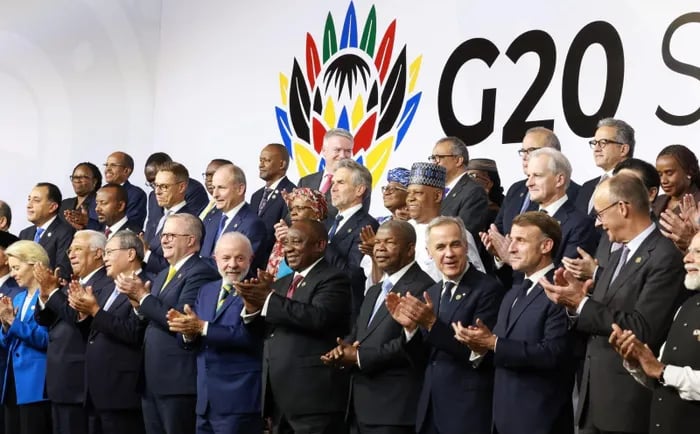

The G20 Leaders’ Summit wrapped Sunday in South Africa after an extraordinary weekend marked by a historic U.S. boycott, an early joint declaration and a break from long-standing diplomatic protocol.
According to NPR, the meeting — the first G20 summit held on the African continent — proceeded without the United States after President Donald Trump refused to attend. The Trump administration objected to what it called the summit’s emphasis on diversity, equity and inclusion and withdrew following Trump’s false claims that South Africa was seizing white-owned farmland and allowing violence against white Afrikaners.
Despite the diplomatic rupture, South African officials declared the event a success. “In a nutshell … this has been a great success for our country,” South African Minister of International Relations Ronald Lamola said Sunday.
Host President Cyril Ramaphosa formally closed the summit by striking a ceremonial gavel, announcing the transition of the G20 presidency to the United States. But with Trump absent, a traditional handover ceremony did not occur. Washington asked that Ramaphosa pass the gavel to a junior U.S. embassy staffer — a request South Africa rejected.
“It’s a breach of protocol,” Ramaphosa spokesperson Vincent Magwenya said. “It has never happened before and it was never going to happen for the first time here in South Africa.” A handover between officials of equivalent rank is scheduled for Monday.
In another break from tradition, Ramaphosa announced on the summit’s opening day that members had reached consensus on a joint declaration — a move typically reserved for the conclusion of G20 gatherings. The United States had urged South Africa not to issue a joint statement and instead release only a “chair’s statement.”
The final declaration included language the U.S. opposed, reaffirming commitments to climate action, gender equality and easing the debt burdens of developing nations. White House spokesperson Anna Kelly criticized the process, saying Ramaphosa refused to ensure a “smooth transition” of the presidency. Trump said he plans to “restore legitimacy” to the group when the U.S. hosts next year’s summit in Florida.
Argentina, whose libertarian President Javier Milei boycotted the event in solidarity with Trump, registered concern over some wording but did not block the declaration.
World leaders praised South Africa’s stewardship, though French President Emmanuel Macron noted continued divisions. While Ramaphosa highlighted the summit’s focus on Global South priorities, Ukraine dominated sideline discussions, with European leaders warning that the U.S.’s new peace plan could leave Kyiv vulnerable to future attacks.
Connect
Discover businesses aligned with your values today.
info@goodmoney-app.com
© 2025. All rights reserved.
Write your text here...
A Subdivision of Original Media Group LLC.